Core Overview of Makita 40V Batteries
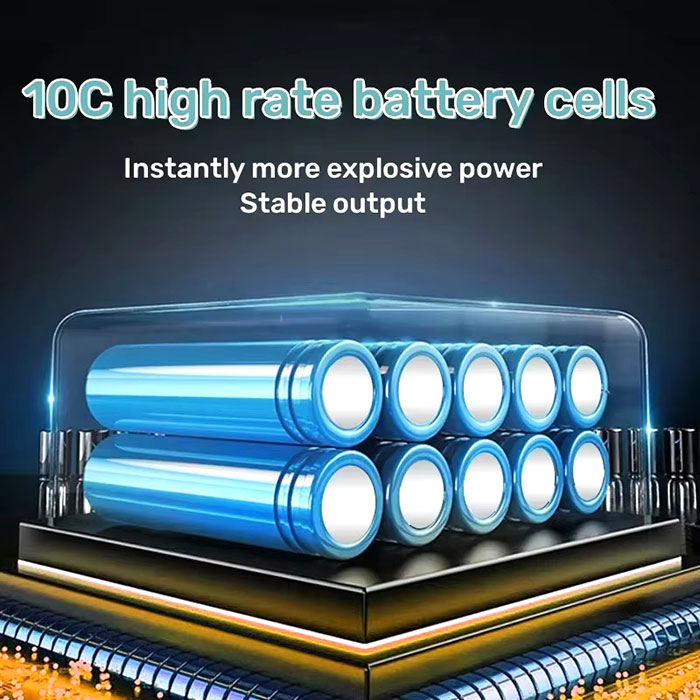
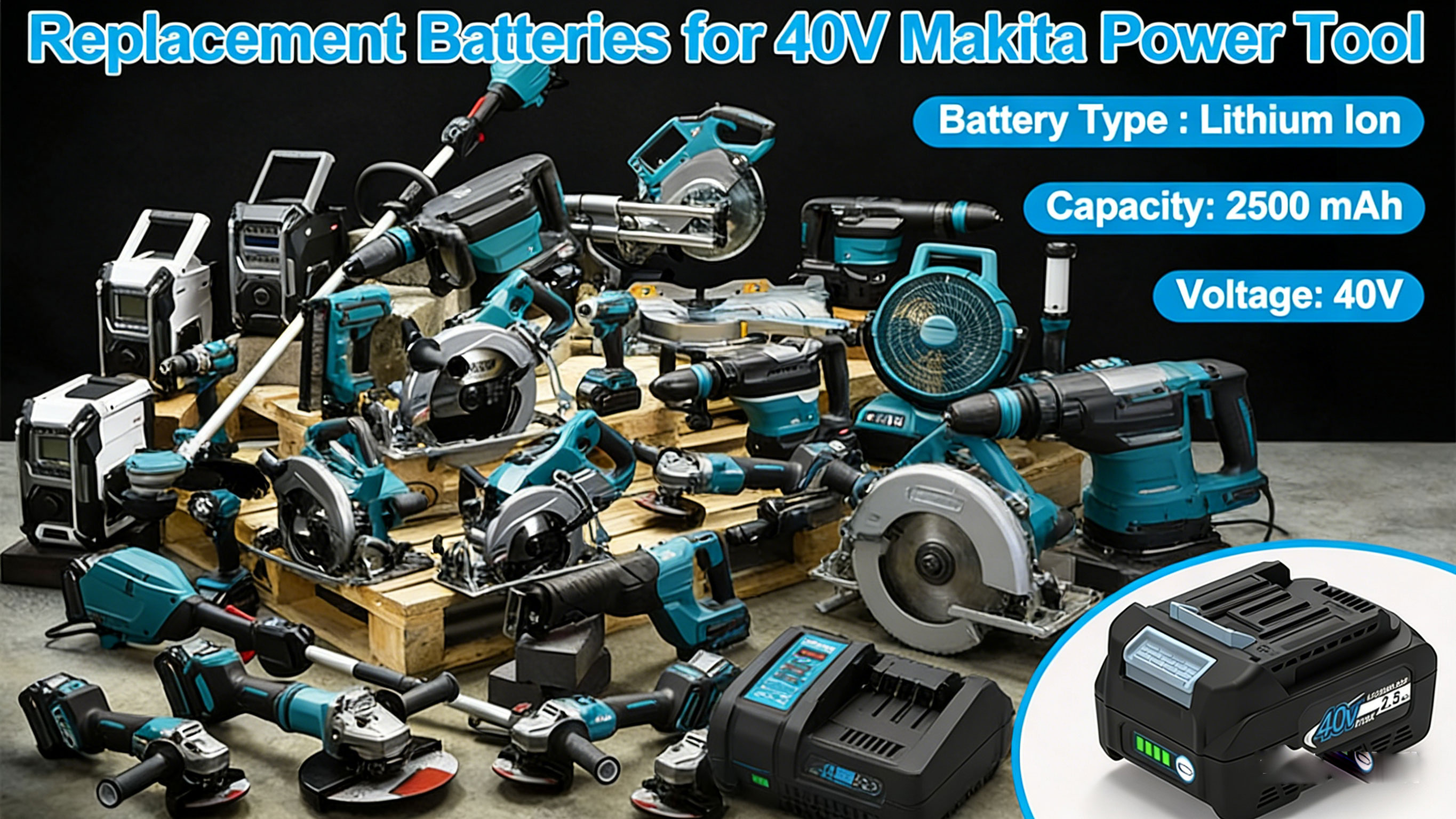
Makita 40V batteries are the backbone of the brand’s professional power tool ecosystem, available in multiple capacity variants to suit diverse work demands. Key models include the BL4020B (2.0Ah) for light-duty tasks (e.g., small drills), BL4040B (4.0Ah) for balanced daily use (e.g., impact drivers), and BL4050F (5.0Ah) for high-load applications (e.g., angle grinders, circular saws). All models utilize high-density lithium-ion 电芯 (lithium-ion cells) with low self-discharge rates—typically losing only 10-15% of charge per month in storage—ensuring reliable power when needed.
Notably, Makita 40V batteries feature a star-protection system (integrated into select models) that works with the tool and charger to prevent overcurrent, overheating, and over-discharge, adding an extra layer of safety for both the battery and user.
Advanced Best Practices for Makita 40V Battery Longevity
To maximize the 500+ charge cycle lifespan (average for Makita 40V batteries), follow these technical precautions—tailored to the battery’s lithium-ion chemistry and design:
-
Precision Control of Discharge CyclesAvoid discharging Makita 40V batteries below 20% capacity, as lithium-ion cells degrade faster when deeply discharged. The LED indicator (3-4 lights on most models) provides clear cues: recharge when only 1 light remains (≈20-30% charge left). For tools like the Makita XGT 40V hammer drill, which draws high current, monitor for sudden power dips—this signals the battery is approaching the discharge threshold, and use should pause.
-
Charger Matching for Optimal Charging SpeedWhile the DC40RA rapid charger works for all Makita 40V batteries, match the charger to the battery capacity for efficiency:
- BL4020B (2.0Ah): Full charge in 25 minutes with DC40RA
- BL4040B (4.0Ah): Full charge in 45 minutes with DC40RA
- BL4050F (5.0Ah): Full charge in 60 minutes with DC40RA
Avoid using lower-wattage chargers (e.g., for 18V batteries) with 40V models, as this can cause incomplete charging and strain the battery’s internal BMS (Battery Management System).
- Temperature Regulation for Cell Health
Makita 40V batteries perform best at 10°C-30°C; temperatures outside 0°C-40°C can damage cells:
- In cold conditions (<5°C): The battery’s internal resistance increases, reducing output power. Warm the battery to room temperature (e.g., in a tool bag) before use—never use a heat source (like a heater) to speed up warming, as this can warp the casing.
- In hot conditions (>35°C): The BMS may trigger a safety shutoff to prevent overheating. Store the battery in a shaded area (e.g., a cool toolbox) and wait until it cools to <30°C before recharging.
- Structural and Contact Maintenance
- Casing Inspection: Check the battery’s polycarbonate casing for cracks—especially around the contact area and bottom (where it connects to the tool). Even small cracks can let in dust/water, damaging the internal cells. If cracks are found, replace the battery immediately (do not attempt repairs).
- Contact Cleaning: Use a dry, lint-free cloth (or a cotton swab for tight spots) to wipe the 4 metal contacts on the battery. For stubborn grease, lightly dampen the cloth with isopropyl alcohol (90%+ purity) — ensure the contacts are fully dry before inserting the battery into a tool or charger.
- Long-Term Storage Protocols
For storage periods exceeding 1 month:
- Charge the Makita 40V battery to 50% (2 LED lights on most models) — this balances cell voltage and prevents self-discharge damage.
- Store in a dry environment with humidity <60% (avoid garages or basements with high moisture).
- Check the charge level every 3 months; recharge to 50% if it drops below 30%.
- Overcharging and Overuse Prevention
- Even with the DC40RA’s smart overcharge protection, disconnect the battery within 1 hour of full charging. Prolonged connection (e.g., overnight) can cause minor voltage fluctuations that degrade cells over time.
- For users with multiple batteries (e.g., 2 BL4040B + 1 BL4050F ), rotate usage based on charge level: Use the battery with the highest charge first, then the next, to avoid draining any single battery too quickly.
Makita 40V Batteries in the XGT Ecosystem
The XGT platform integrates Makita 40V batteries into a versatile 40V/80V system, unlocking enhanced performance for heavy-duty tools. Here’s how to optimize 40V battery use in XGT setups:
-
Dual-Battery 80V ConfigurationFor XGT 80V tools (e.g., the Makita GCU01Z 80V concrete cutter), pair two identical Makita 40V batteries (e.g., two BL4050F ) to achieve 80V output. Ensure both batteries have a charge level within 10% of each other (e.g., 50% and 55%)—mismatched charge levels can cause the BMS to limit power, reducing tool performance.
-
XGT BMS Synergy with 40V BatteriesXGT 40V batteries feature an upgraded BMS that communicates with XGT tools to adjust power delivery:
- When using a high-torque tool (e.g., XGT impact wrench), the BMS reduces current if the battery temperature exceeds 45°C, preventing overheating.
- For low-power tools (e.g., XGT cordless fan), the BMS lowers output to conserve charge, extending runtime.
To leverage this, always use genuine Makita XGT tools with XGT 40V batteries—third-party tools may not support BMS communication, increasing battery damage risk.
- Runtime Optimization for XGT Tasks
- For continuous use (e.g., 1-hour of cutting with the XGT circular saw), use the BL4050F (5.0Ah) battery for longer runtime; keep a BL4040B (4.0Ah) as a backup, charged and ready to swap.
- For intermittent tasks (e.g., assembling furniture with an XGT drill), the BL4020B (2.0Ah) is lighter and more portable, reducing user fatigue without sacrificing performance.
Troubleshooting Common Makita 40V Battery Issues
| Issue | Cause | Solution |
|---|---|---|
| Battery not charging | Dirty contacts or incompatible charger | Clean contacts with isopropyl alcohol; use only Makita 40V chargers (DC40RA, DC40RB) |
| Reduced runtime (e.g., BL4040B lasts <30 mins) | Degraded cells (after 500+ cycles) or deep discharge | Test with a Makita battery tester; replace if cell voltage is <3.6V per cell |
| Battery overheats during use | High ambient temperature or tool overload | Pause use, cool battery to <30°C; reduce tool load (e.g., use a slower speed for cutting) |
| LED indicator flashes red | BMS error (overcurrent/overheating) | Disconnect from tool/charger, cool battery; if error persists, contact Makita service |
Final Summary
Makita 40V batteries deliver reliable performance for professional tools, but their lifespan and efficiency depend on proper care—from matching chargers to regulating temperature and leveraging the XGT ecosystem’s features. By following the technical guidelines above, you can ensure your BL4020B, BL4040B , or BL4050F battery maintains high capacity, minimizes downtime, and supports heavy-duty work for years.